

The most effective exercises for your legs will develop the muscles to give you strength, stability, and endurance and assist you in tasks like walking, running, and most sports.
Regardless of your location or the equipment available, incorporating specific exercises for your legs into your routine will make a noticeable difference.
When designing a leg day workout plan, it is important that all the muscles be worked in different ways. The lower body contains many vital muscle groups, including the quadriceps, hamstrings, glutes, and calves, and training them appropriately with the correct exercises for legs will improve your muscle strength and increase flexibility and control over your movements.
All of the following leg exercises are effective, whether for beginners or experienced fitness devotees, and most can be scaled according to the experience, equipment, and goal of the individual.
The squat is considered among the most beneficial exercises for your legs, as it works several lower-body muscles at the same time. Targeting the quadriceps, hamstrings, and glutes of the lower leg primarily, it will work the core too to increase stability throughout the exercise.
Squats can be performed with bodyweight, weights added through dumbbells, or on a barbell, and are perfect as the weight can be increased with the level of experience. Focus on lifting with the chest pointing forward and the movement originating from your hips. This is one of the most useful exercises for your legs, as the strength gained will improve the ease of everyday movements such as sitting, standing, and climbing stairs.
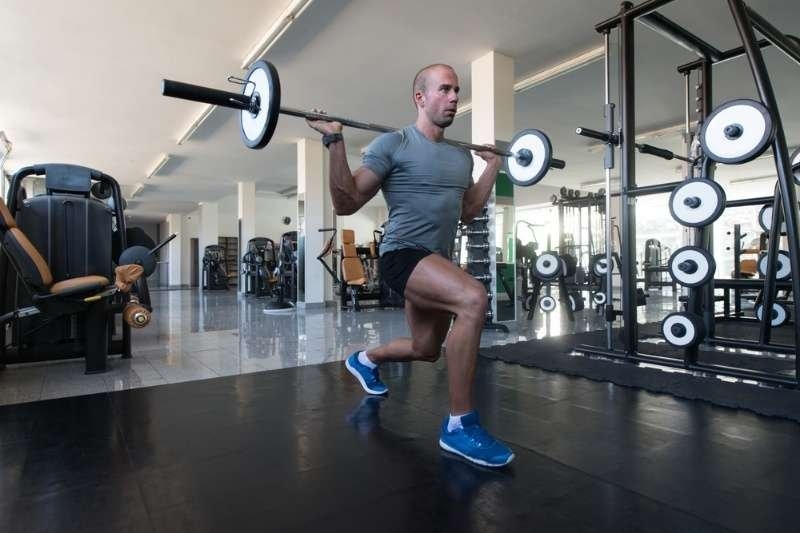
Lunges are another helpful exercise for your legs, as they work the muscles of the thighs, glutes, and hips, developing strength and coordination in each leg independently as well as strengthening both sides of the lower body. There is a range of different leg day exercises and workouts using lunges, including walking lunges, side lunges, and reverse lunges, but beginners can start by performing lunges with only bodyweight, later gradually adding weight.
These are a great exercise for legs, as when working one side of the body, the stabilization muscles supporting the leg work constantly to improve lower-body control.
Deadlifts are considered one of the best exercises you can perform to increase lower-body power and strength, as they also work the entire back and the core but especially target the hamstrings, glutes, and hips. This form of exercise will teach the right form of lifting and will give a large boost in strength overall.
They should always be added to your leg day exercises when aiming to target the posterior muscles of the legs. Use a managed amount of weight for the movement.
These tough exercises for the legs work one side of the lower body at a time, meaning differences in muscle strength can be worked and trained. The quads and glutes are heavily engaged, but due to their difficulty, there is a high degree of muscle control involved.
These can be performed with added weights either on a dumbbell or by holding two dumbbells. They are a good inclusion on leg day as they provide a challenging additional exercise.
The leg press allows for full lower-body, controlled training within the gym at different heights, depending on what muscles are being worked. The glutes and hamstrings work, but the quads are significantly targeted.
People who do not want to focus on balance as much as during free-weight training can gain strength using this exercise, as it assists each side through the pressing motion. Include it in your leg day to build more power when it comes to exercises for legs.
Calf raises are a small exercise with a huge difference to overall fitness and should always form part of your leg day exercises. Calves will increase your ability to walk, run, and jump and will help improve stability in your lower body.
They can be performed by sitting or standing with or without added weight. Often ignored by those who want to build bigger muscles, you should not miss these on your leg training day plan.
A really good lower-body workout should aim to develop strength, balance, and endurance within the body through various movements. A comprehensive leg workout that aims for the balanced development of your legs should involve several lower-body muscles during the set.
A decent leg day training routine could include squats, lunges, deadlifts, leg presses, and calf raises; always work within a safe range that does not limit you from performing the exercises correctly. Ensure that you always incorporate rest, sleep, and a good diet in order to maximize your results from training legs.
There are several common mistakes that many people will make when exercising their legs, which can hinder the results they are getting as well as increase the risk of injury:
Regularly incorporated exercises for legs can improve your strength, your balance, and your control in all your physical movements. A truly comprehensive leg day exercise routine should engage many of the lower body muscles.
With dedication to form, you will build stronger legs that will help you achieve your fitness goals through many different leg workouts in your training week.
There’s no ‘absolute best time to train your legs,' as it relies on the individual’s lifestyle and stamina. Some individuals feel most energetic in the early afternoon.
Others prefer working out in the morning and late evening, and as long as it allows them to hit each major group during a period, they'll hit them all, truly.
If so, you are definitely on the right track with this question, as strengthening some of the muscles around the ankles, legs & knees, and those such as balance & lunge & split squat moves require stability control, and when using such motions, can help improve your body balance.
Although this seems like it ought to make common sense, there appear to be some people who think it's better and much the exact same day as you’ll hit some of the greater musculature, but, as always, form first—do your basic squatting & jumping & so forth, and then increase resistance incrementally.
It depends mostly on intensity, movement, and individual body—normally 30-60 minutes for the most experienced individuals, but some may find 20 or 40 minutes just fine.
This content was created by AI