

A strong back changes more than the way a person looks in a T-shirt. It helps with posture, pulling strength, shoulder stability, and even the way daily movement feels. Lifting grocery bags, sitting at a desk, carrying a backpack, or training other muscle groups all become easier when the back is not weak or stiff.
The good news is that a full gym is not always needed. With a pair of dumbbells and a little space, a person can train the lats, traps, rhomboids, rear delts, and lower back properly. That is why dumbbell back workouts are so useful for people who want strength without waiting for machines or setting up complicated equipment.
The key is control. Back training is not about swinging weights around and hoping something works. It is about pulling with intention, squeezing the right muscles, and keeping the spine in a safe position. Once that part clicks, dumbbells can do a lot.
Good dumbbell back workouts help train each side of the body more evenly. Machines and barbells are useful, but the stronger side can sometimes take over. Dumbbells make each arm work harder on its own, which can help fix strength gaps over time.
Another reason they work well is simple convenience. Dumbbells do not take much space. They can be used in a bedroom, garage, gym corner, or small home setup. For anyone building an at home back workout, they are one of the most practical tools available.
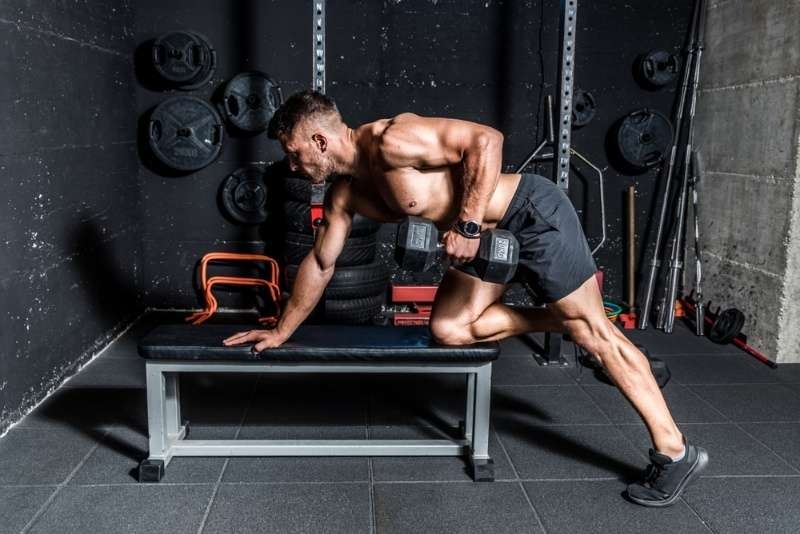
The single arm row is one of the best dumbbell exercises for back because it targets the lats, mid-back, and upper back without needing much equipment. It also helps each side work independently.
To do it, one hand and one knee can rest on a bench, sofa edge, or sturdy surface. The other hand holds the dumbbell. The lifter pulls the weight toward the hip, pauses briefly, then lowers it with control.
The mistake many people make is pulling straight up toward the chest. For better lat engagement, the dumbbell should travel more toward the waist. The shoulder should not shrug up near the ear.
This exercise is also one of the most useful dumbbell back exercises for beginners because the movement is easy to learn and adjust.
The bent over row trains both sides of the back at the same time. It looks simple, but it needs focus. The lifter stands with dumbbells in both hands, pushes the hips back, bends the knees slightly, and keeps the chest angled toward the floor.
From there, both dumbbells are pulled toward the ribs. The elbows move back, the shoulder blades squeeze, and the weights return down slowly.
This move is great for people who want to build back muscles dumbbells can actually challenge. Since both arms work together, the body can usually handle more total load than a single arm version.
Still, form matters more than weight. If the lower back starts rounding or the body begins bouncing, the dumbbells are probably too heavy.
Although many people think of Romanian deadlifts as a hamstring exercise, they also train the lower back, spinal erectors, glutes, and upper back support muscles. This makes them a smart addition to back workouts with dumbbells.
The movement begins standing tall with dumbbells in front of the thighs. The lifter pushes the hips back, keeps the spine neutral, and lowers the weights along the legs. Once a stretch is felt in the hamstrings, the hips drive forward to stand back up.
This is not a squat. The knees bend slightly, but the hips do most of the movement. The dumbbells should stay close to the body throughout.
For people doing an at home back workout, this exercise adds strength where many home routines are weak: the posterior chain.
The dumbbell pullover is an old-school exercise, but it still earns its place. It trains the lats, chest, serratus, and core control. When done slowly, it helps the back feel stretched and engaged.
The lifter lies on a bench or firm surface, holding one dumbbell with both hands above the chest. The arms stay slightly bent as the weight moves back behind the head. Then the lats pull the dumbbell back over the chest.
This is one of the best dumbbell exercises for back when the goal is to feel the lats working through a long range. It should not be rushed. Fast reps can irritate the shoulders, especially if mobility is limited.
A pullover should feel smooth. If it feels awkward, reducing the range of motion is better than forcing it.
Do Read: Affordable High Protein Foods for Men Who Work Out Daily
The reverse fly targets the rear delts and upper back. These muscles are commonly neglected, particularly by those who are sitting for extended hours or doing just chest exercises.
To do it, the lifter bends at the hips, keeping a flat back, and holds light dumbbells below the chest. The arms move out to the sides until they reach shoulder height, then return down with control.
This is not a heavy lifting exercise. Lighter weights usually work better because the goal is control, not momentum. The shoulder blades should move naturally, but the traps should not take over completely.
For dumbbell back exercises for beginners, this move teaches awareness. It helps people feel the upper back working instead of pulling everything with the arms.
A chest supported row is excellent for people who struggle with lower back fatigue during bent over rows. The chest rests against an incline bench, and the arms pull the dumbbells toward the ribs.
Because the body is supported, the back muscles get more direct attention. There is less cheating, less swinging, and less pressure on the lower back. That makes it helpful for both beginners and experienced lifters.
Anyone trying to build back muscles dumbbells can use progressive overload here. That means slowly adding weight, reps, or better control over time.
The movement should feel steady. Pull, squeeze, lower. No drama. No jerking. Just clean work.
Shrugs focus on the traps, which sit along the upper back and neck area. Strong traps can improve upper-body strength and give the back a more complete shape.
The lifter stands tall with dumbbells at the sides and raises the shoulders upward toward the ears. After a short pause, the shoulders lower fully.
The common mistake is rolling the shoulders. That is not needed. A straight up-and-down motion works better and feels cleaner.
Shrugs fit well at the end of a routine because they do not require too much setup. They can also be paired with rows for a simple finishing set.
A good back day does not need every exercise at once. For most people, four to five movements are enough. The routine should include a row, a hip hinge, an upper back movement, and one optional finisher.
A simple routine could look like this:
This can be done once or twice per week, depending on the person’s overall training plan. Rest time can stay around 60 to 90 seconds between sets.
The weight should feel challenging but manageable. If form breaks before the set ends, it is too heavy. If the final reps feel too easy, it may be time to increase the load slightly.
Check Out: Best Exercises for Testosterone That Actually Work
Many people turn back training into arm training without realizing it. They grip hard, pull fast, and forget to move through the shoulder blades. The back needs a good stretch and squeeze to work properly.
Another mistake is rounding the spine during rows or deadlifts. A neutral back is important, especially when the dumbbells get heavier. The core should stay engaged, and the hips should support the movement.
Some people also rush reps. Slower lowering can make the exercise much more effective. It builds control and keeps tension on the muscles longer.
For steady progress, the lifter should track weights, reps, and how the movement feels. Small improvements matter. One extra rep, cleaner form, or better control is still progress.
Yes, they can assist with posture if you practice them frequently and with excellent technique. Rows, reverse flyes and pullovers build the muscles that pull the shoulders back and support the upper spine. But posture is also dependent on daily habits, workstation set up, movement and core strength. Exercise is helpful but is most effective when paired with improved sitting and moving behaviors.
The correct weight depends on your expertise, strength and the workout. Reverse flyes are normally considerably lighter, although rows are allowed to be heavier. A good rule is to choose a weight that allows clean reps without swinging or rounding the back. The final two repetitions should be difficult, but the lifter should still feel in control.
Back is usually coupled with biceps since most pulling actions already use the arms. This may make the exercise seem natural and, efficient. Some individuals also exercise back alongside chest in an upper body session Both are possible. It all depends on the person’s schedule and recuperation and complete training plan for the week.
This content was created by AI